
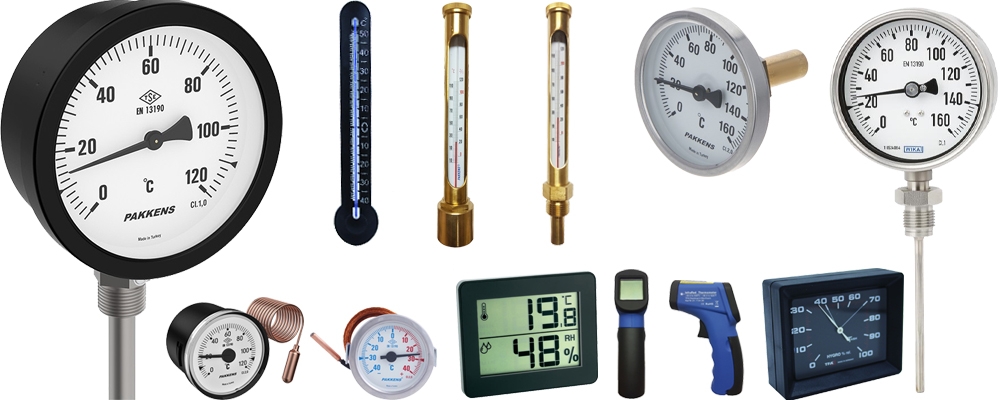
Temperature control and measurement equipment are essential tools for monitoring and controlling operations in various industries such as manufacturing, oil and gas, and more. Broadly, there are two main types of temperature measurement devices: thermocouples and thermometers. Temperature is a physical and relative quantity that defines the degree of warmth or coldness of a substance. As thermal energy in a material increases, its temperature rises. This quantity is measured in various units, including Celsius, Fahrenheit, Kelvin, and Rankine. Regardless of whether the device is a thermocouple or a thermometer, the common factor is the sensitivity to physical changes that indicate temperature.
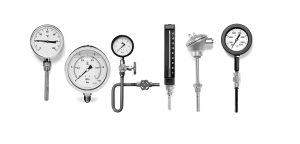
Types of Temperature Measurement Equipment:
- Industrial Thermocouple: A thermocouple is a device made by joining two dissimilar metals. When the junction is heated, the difference in their thermal expansion coefficients results in a measurable change in length, which can be converted into an electrical signal.
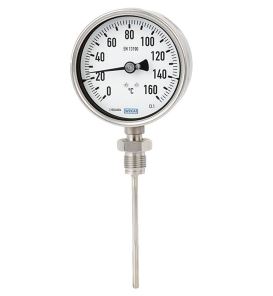
- Thermometers 1. Expansion Thermometer 2. Laser Thermometer 3. Portable Digital Thermometer 4. Gas Thermometer 5. Bimetallic Thermometer
- Resistance Temperature Detector (RTD): RTD sensors appear as wire resistors, often wound into a non-inductive coil or made of nickel. RTD stands for "Resistance Temperature Detector," referring to sensors that measure temperature through changes in resistance.
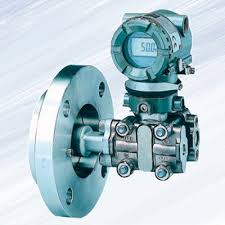
- Temperature Transmitter: Temperature transmitters are connected to temperature sensors and transmit signals to a PLC or display system for monitoring and control purposes.
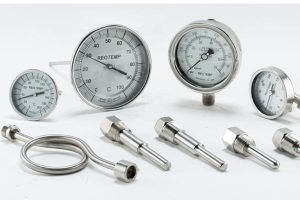
- Thermowell A thermowell protects sensors and measuring instruments from high pressures, corrosive materials, or abrasive substances. It also eliminates the need to drain process liquids before removing or replacing temperature sensors.
- Infrared Sensors: These handheld devices use infrared energy to display temperature readings on a digital screen. Since they can measure from a distance, they are typically used for mobile applications or hazardous materials. این ابزارهای دستی از انرژی مادون قرمز استفاده می کنند تا خواندن دما را نشان دهند و دمای عددی را روی صفحه نمایش دهند.از آنجا که این تجهیزات قادر به خوانش از فاصله دور هستند ، معمولاً برای کاربردهایی شامل تجهیزات متحرک یا مواد خطرناک مورد استفاده قرار می گیرند.
- Thermostats: A thermostat is an automatic electrical control device used to regulate temperature in enclosed spaces, typically connected to heating or cooling systems. It maintains a preset temperature by switching the system on or off.
- Temperature Gauges
- Bimetallic Instruments
- State-changing Sensors
- Silicon Diode Instruments
- Phase-Change Sensors
- Silicon Diode Sensors
Advantages and Disadvantages of Various Temperature Measurement Devices:
IC Temperature Sensors
- Advantages: Linear behavior, high output, cost-effective
- Disadvantages: Maximum measurable temperature is 200°C, slow response time, self-heating
Thermocouples
- Advantages: No power supply needed, simple operation, wide measurement range
- Disadvantages: Non-linear behavior, low voltage, requires a reference point, low stability, low sensitivity
Thermistors
- Advantages: High output, fast response, two-wire for measurement
- Disadvantages: Non-linear behavior, narrow measurement range, requires current supply, self-heating
RTD
- Advantages: High stability, high accuracy, linear behavior (better than thermocouples)
- Disadvantages: Higher cost, requires current supply, self-heating
Four Main Methods for Measuring Temperature:
- Change in Capacity Due to Temperature in Dissimilar Metals: Used in resistive and thermistor-based devices.
- Change in Electrical Resistance Due to Temperature: Used in resistive and thermistor-based devices.
- Expansion of a Material Due to Temperature: Causes changes in length, volume, and pressure, such as in mercury or alcohol thermometers.
- Change in Radiant Energy Due to Temperature: Used in radiation and optical measuring devices.
Applications
- Oil and Gas Industry
- Food Industry
- Pharmaceutical Industry
- Water and Wastewater
Reviews
There are no reviews yet.