
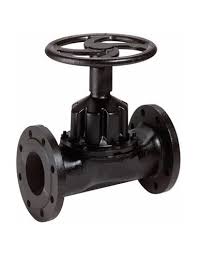
Diaphragm valves are used for both stopping and controlling fluid flow, making them versatile in handling hazardous fluids or systems under vacuum conditions.
The diaphragm, a flexible disk, is connected to the valve stem, and its movement controls the flow of the fluid. These valves are ideal in cases where even the smallest leak could cause a loss of vacuum or where hazardous fluids need to be managed carefully.
Key Characteristics: Sensitivity to Pressure and Temperature: The diaphragm is sensitive to high pressure and temperature, limiting the use of diaphragm valves in extreme conditions. However, their design offers excellent sealing and minimal leakage, making them suitable for specific applications like controlling corrosive or abrasive fluids.
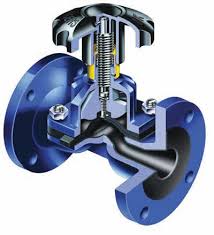
Types of Diaphragm Valves:
- STRAINT-THROUGH -TYPE
- WEIR TYPE-TYPE
Functionality of Diaphragm Valves:
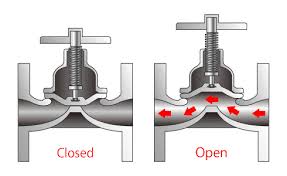
Diaphragm valves operate similarly to a clamping mechanism. The flexible diaphragm, attached to a stem, moves in response to the motion of the valve stem (up or down). Closing: When the valve stem moves downwards, the diaphragm and the pressure plate move down, sealing the flow path and stopping the fluid. Opening: When the valve stem moves upwards, the diaphragm moves upward along with the pressure plate, allowing the fluid to flow through the valve. This design ensures minimal leakage of the fluid outside of the valve body, except where the diaphragm seals the valve body.
Applications
- Oil and Gas Industry:
- Steel Industry
- Mining Industry
- Marine Industry
- Petrochemical and chemical industries
- Nuclear and Power Plants
Pressure - Class:
- Diaphragm Valve class #150
- Diaphragm Valve class #300
- Diaphragm Valve class #600
- Diaphragm Valve class #900
- Diaphragm Valve class #1500
- Diaphragm Valve class #2500
Reviews
There are no reviews yet.